A MEANING GUIDE BEFORE THE INK
Love. Longing. Liking.
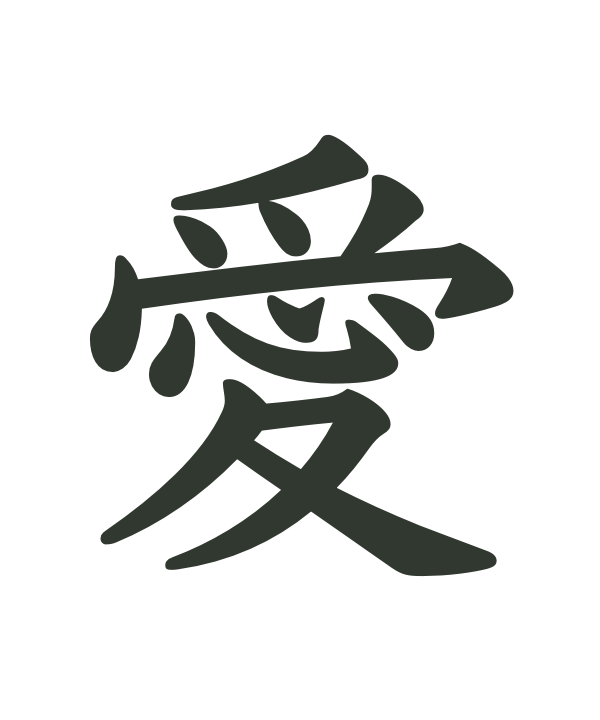
AI あい
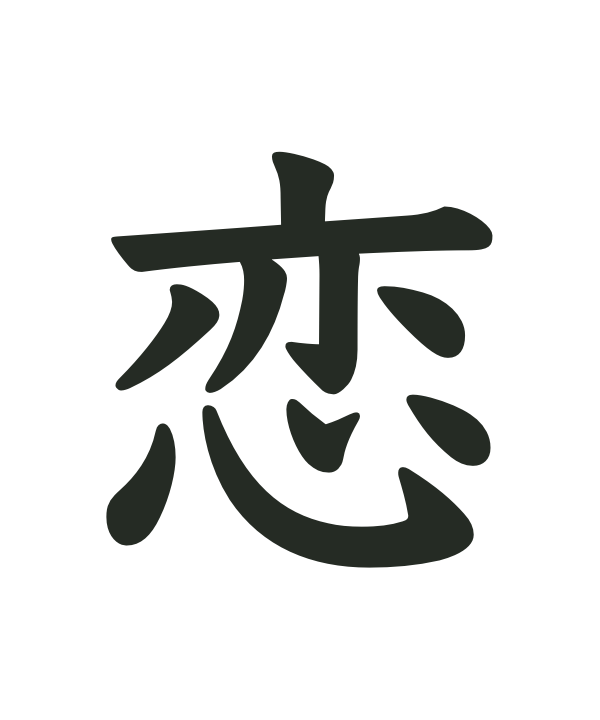
KOI こい
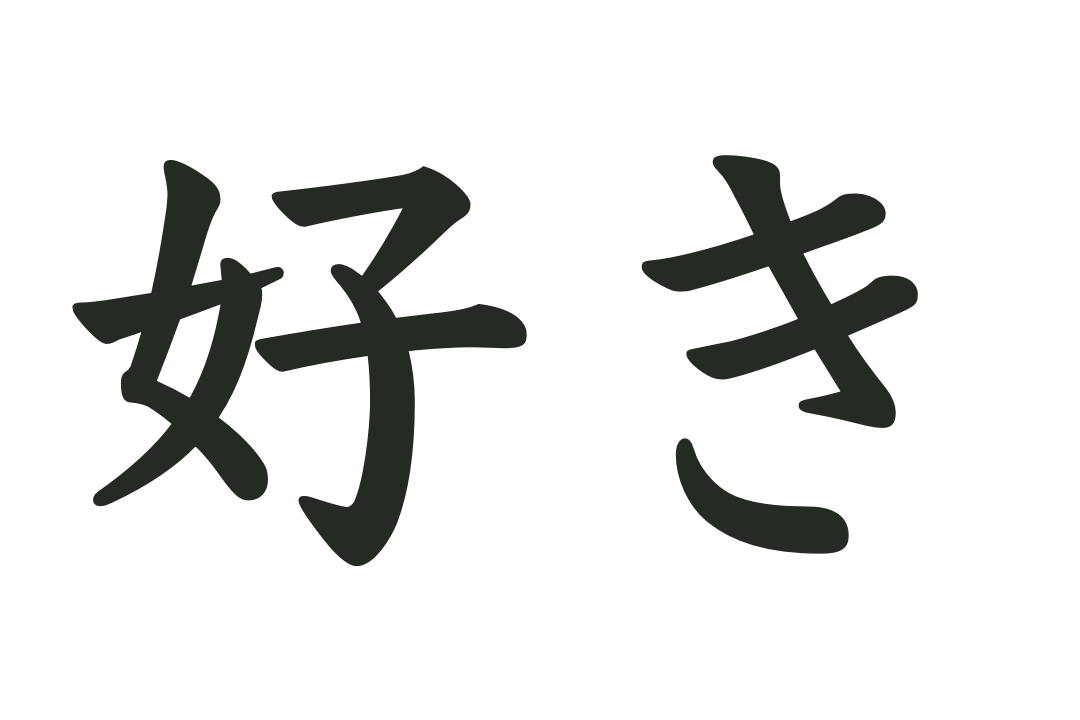
SUKI すき
Similar translations.
Different nuances.
愛 (ai), 恋 (koi), and 好き (suki) can all describe affection. Their uses overlap, but the situation changes what they communicate.
LOVE & AFFECTION
Ai / あい
Love can take many forms.
Used for romantic love, family love, and care for others.
愛 can express affection, cherishing, or caring deeply about someone or something. It includes romance, but is not limited to romantic relationships. The full word and context still matter.
Dictionary reference: 愛 ↗ROMANTIC LOVE & LONGING
Koi / こい
The feeling of being in love.
Often used for romantic feelings and longing for someone.
恋 commonly refers to being drawn to someone romantically or yearning for them. This focus differs from the broader uses of 愛, although both can be part of a romantic relationship.
Dictionary reference: 恋 ↗LIKING & AFFECTION
Suki / すき
What you like. Who you’re drawn to.
Used for people, things, and activities you like.
好き can express a preference or affection. Said to someone in a romantic setting, it can communicate romantic interest. It is not always a weaker feeling than “love”: context and the relationship matter.
Keep the kana き: 好き is a word written with kanji and hiragana, not a single kanji. 好 alone is not the same written word.
Dictionary reference: 好き ↗MEANING BEFORE INK
Which meaning
speaks to you?
- 愛
- Love & affection
- 恋
- Romantic love & longing
- 好き
- Liking & affection
These are not three steps on a fixed scale from weak to strong. 好き can be romantic, 愛 can be romantic or broader, and 恋 centers on romantic feelings and longing.
Start with the person, feeling, or memory you want to express. Neither 愛 nor 恋 alone forms the sentence “I love you.” 好き can work as a contextual expression of affection, but does not explicitly identify who likes whom. A personal association can make a design meaningful, but it is different from a literal translation.
This is not a rule that 愛 is always selfless or 恋 is always selfish. Those are interpretations, not a reliable dictionary definition of the difference.
Confirm your choice and the final lettering with a fluent Japanese reader and your tattoo artist. Review the actual character, orientation, spacing, and legibility at your intended size.
Try lettering for 愛 ↗