CHECK THE MEANING. CHECK THE LETTERING.
A small mistake.
A lasting difference.
Five examples to help you check a kanji tattoo before it becomes permanent.
These are teaching examples we created, not photographs of real tattoos or claims about anyone’s design. A character can be correct while its intended meaning is not. Personal symbolism is a choice; an inaccurate translation is a different issue.
A concept is not a sentence
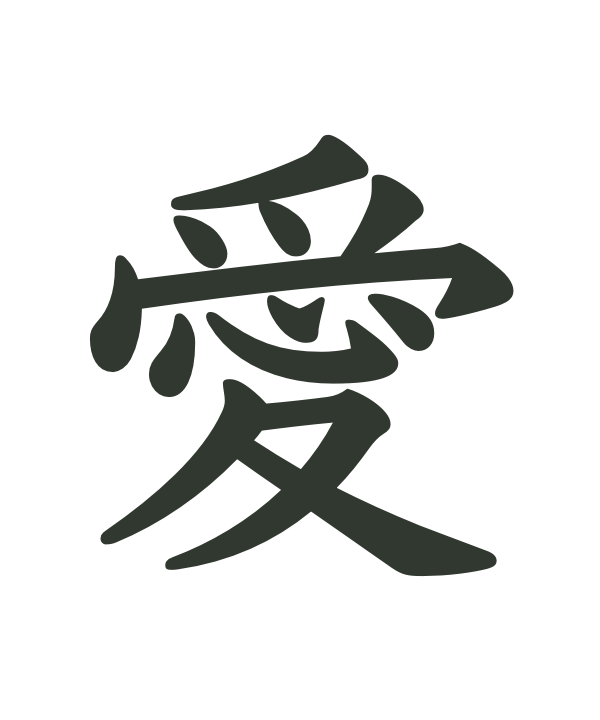
Mistaken claim: “This character literally says ‘I love you.’”
What it means: 愛 (ai / あい) expresses love or affection. It does not specify “I” or “you” and is not that complete sentence. It can still be a meaningful choice for the concept of love.
Before the ink: Decide whether you want a concept or a message to someone. Have a complete phrase checked in its intended context.
Dictionary reference: 愛 ↗Reversing the characters changes the word
Mistaken claim: “The same two characters mean freedom in either order.”
What to check: The Japanese word for freedom is 自由, in that order. Reversing it does not preserve that word. The reversed example here is a deliberate rearrangement, not a proposed translation.
Before the ink: Check the whole word and its reading. If you use vertical lettering, confirm the reading order of the final layout with a Japanese reader.
Dictionary reference: 自由 ↗A guessed reading can be wrong
炎Incorrect reading in this example: hinoo / ひのお.
Checked reading: honō (also written honoo) / ほのお, meaning flame. A kanji can have other readings in other words; this example concerns the standalone word 炎.
Before the ink: Confirm the kana as well as the romanization, especially if you include pronunciation in the artwork.
Dictionary reference: 炎 ↗Mirrored lettering is not the original character
愛 / aiA reflected image may look convincing to someone who cannot read it. The mirrored illustration is intentionally altered; do not copy it as lettering.
Before the ink: Ask your artist to confirm that the transferred stencil reads correctly on the skin. If a photo looks reversed, check the original design too: selfie images can be mirrored.
A cropped character is an incomplete reference
A screenshot or tightly cropped image can lose part of a character. The altered example above is not a different word: it is an incomplete image.
Before the ink: Compare the entire artwork with a reliable reference. Handwritten styles can differ from printed fonts, so have a Japanese reader check any unusual forms instead of treating every stylistic difference as an error.
Your final design checklist
- Confirm the intended meaning and the whole phrase.
- Check the exact characters, their order, kana, and pronunciation.
- Have a fluent Japanese reader review the actual artwork, not just a typed draft.
- Check the final stencil’s orientation and complete lettering with your artist.
- Review spacing and legibility at the intended tattoo size.
Our typeset character images are learning references, not custom calligraphy or ready-to-use stencils.
BEFORE THE INK
Compare final lettering
Place your artwork beside a dictionary reference to discuss character order, orientation and complete lettering.
Reference only. This tool does not verify meaning, reading, cultural appropriateness or suitability for tattooing. Lettering styles and layouts can differ. Ask a fluent Japanese reader to review the full wording and lettering, and discuss the actual-size stencil with your tattoo artist.
Check for missing or extra characters, character order, orientation and mirroring, and legibility of the complete design.
Your selected image stays in this browser. This tool does not upload it or save it to your account. Use Remove image to clear this comparison. Your original file is unchanged.
Your artwork
Choose an image to display it here.